

PTSD Awareness Month
Updated: Jul 27
June is recognized as PTSD Awareness Month, and June 27th is observed as National PTSD Awareness Day. In 2010, National PTSD Awareness Day was established to bring attention to the prevalence of PTSD in the military community and to honor Army Staff Sergeant Joe Biel who battled with PTSD following combat and took his own life. In 2014, June was officially designated as PTSD Awareness Month to include the multitude of factors and experiences that can lead to PTSD. These observances are dedicated to increasing public understanding of post-traumatic stress disorder (PTSD), reducing stigma, promoting early intervention, and encouraging those affected to seek help.
What Is PTSD?
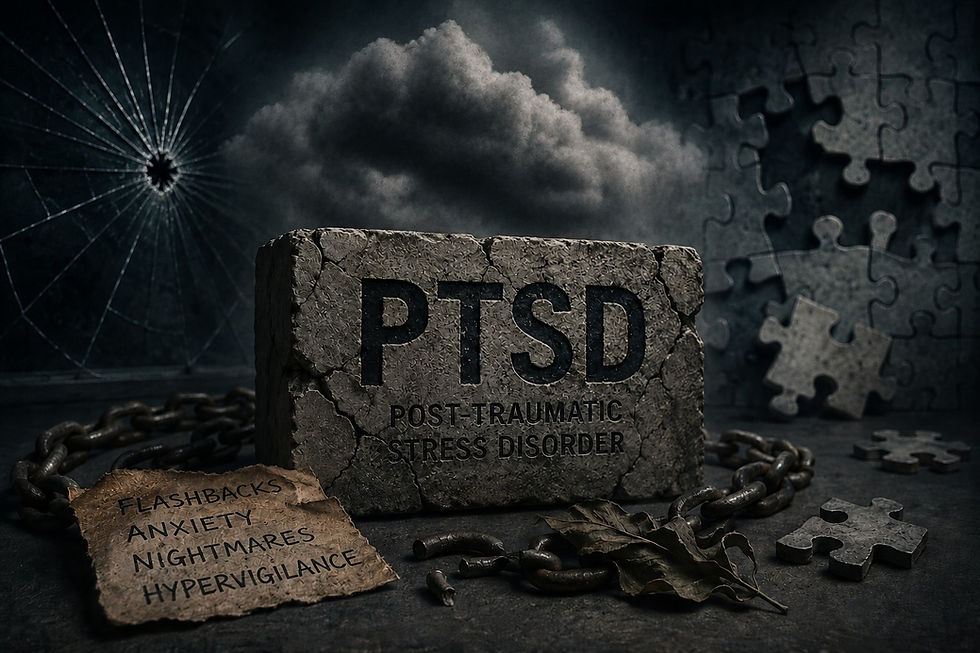
Originally referred to as "shell-shock" or "combat fatigue", PTSD (post-traumatic stress disorder) was defined in 1980 as a mental health condition that may develop after a person experiences or witnesses a traumatic event. These events can include military combat, sexual or physical assault, serious accidents, natural disasters, terrorism, or other life-threatening situations. While it is normal to experience distress after trauma, PTSD occurs when symptoms persist and significantly interfere with daily functioning.
Common PTSD Symptoms
PTSD symptoms fall into the following categories:
Intrusive symptoms
o Flashbacks
o Distressing memories
o Nightmares related to the traumatic event
Avoidance symptoms
o Avoiding places, people, activities, or conversations that trigger memories of the trauma
Changes in thoughts and mood
o Persistent feelings of fear, guilt, shame, or hopelessness
o Difficulty experiencing positive emotions
o Feeling detached from others
Changes in arousal and reactivity
o Hypervigilance
o Irritability or anger
o Difficulty concentrating
o Sleep disturbances
o Being easily startled
Dissociation
o Feeling that life isn't real
o Feeling outside of the body
Who Is Affected by PTSD?
PTSD can affect anyone, regardless of age, gender, ethnicity, or background. Although often associated with military veterans, PTSD also affects civilians who have experienced or witnessed traumatic events. Children, adolescents, and adults can all develop PTSD. Approximately 12 million U.S. adults will experience PTSD each year. Globally, 70 percent of the population will experience a traumatic event in their lifetime, and 3.9% of those people will develop PTSD.
People who may be affected include:
Military service members and veterans
Survivors of abuse or violence
First responders and healthcare workers
Survivors of accidents or disasters
Victims of crime
Refugees and displaced individuals
Children exposed to trauma
What Causes PTSD?
PTSD develops following exposure to a traumatic event. The trauma may be experienced directly, witnessed, learned about happening to a loved one, or repeatedly encountered through work-related exposure.
Examples of traumatic events include:
Military combat
Physical or sexual assault
Domestic violence
Serious accidents
Natural disasters
Terrorist attacks
Sudden or violent loss of a loved one
Childhood abuse or neglect
Not everyone who experiences trauma develops PTSD. Recovery depends on many factors, including the severity of the trauma, available support systems, and individual resilience.
What are the Risk Factors for PTSD?
Several factors may increase the likelihood of developing PTSD:
Experiencing intense or prolonged trauma
Repeated exposure to traumatic events
Childhood adversity or abuse
Previous mental health conditions, such as anxiety or depression
Lack of social support after the trauma
Ongoing stress following the traumatic event
Family history of mental health conditions
Protective factors, such as strong social support, healthy coping skills, and access to mental health care, may reduce the risk of developing PTSD.
How Is PTSD Diagnosed?
PTSD is diagnosed by a qualified healthcare or mental health professional through a comprehensive evaluation. Providers assess:
Exposure to a traumatic event
Type and severity of symptoms
Duration of symptoms
Impact on daily functioning, relationships, and work
For a diagnosis, symptoms typically must persist for more than one month and cause significant distress or impairment. Screening tools and structured interviews may also be used during the evaluation process.
What Treatments are Available for PTSD?
The good news is that PTSD is treatable, and many individuals experience significant improvement with appropriate care. Effective treatments include:
Psychotherapy
Evidence-based therapies include:
Cognitive Processing Therapy (CPT) to change negative emotions and beliefs
Prolonged Exposure Therapy (PE) to re-experience the trauma in a safe way to control symptom triggers
Trauma-Focused Cognitive Behavioral Therapy (TF-CBT) for children and adolescents
Eye Movement Desensitization and Reprocessing (EMDR) uses rapid eye movement to reprocess the memory of the trauma to experience it in a different manner
Group Therapy to share experiences and emotions in a comfortable and non-judgmental setting
These therapies help individuals process traumatic memories, reduce distress, and develop healthier coping strategies.
Medication
Healthcare providers may prescribe medications, such as antidepressants, to help manage symptoms including anxiety, depression, sleep disturbances, and intrusive thoughts.
Self-Care and Support
Additional recovery strategies include:
Support groups
Stress management techniques
Physical activity
Mindfulness and relaxation practices
Strong social connections
Healthy sleep habits
Research consistently shows that treatment can reduce symptoms and improve quality of life.
Raising Awareness and Reducing Stigma
PTSD Awareness Month and National PTSD Awareness Day provide opportunities to educate ourselves, support those affected by trauma, and encourage conversations about mental health. By increasing awareness and promoting access to treatment, we can help individuals with PTSD find hope, healing, and recovery. If you or someone you know may be struggling with PTSD, reaching out for support is a strong first step. Awareness can save time, reduce isolation, and open the door to healing.
References and Additional Resources
For information on health and wellness for the body, mind, and soul, please visit NurtureYourWholeSelf.com


Comments